End result

And these are the old 64x64 panels:
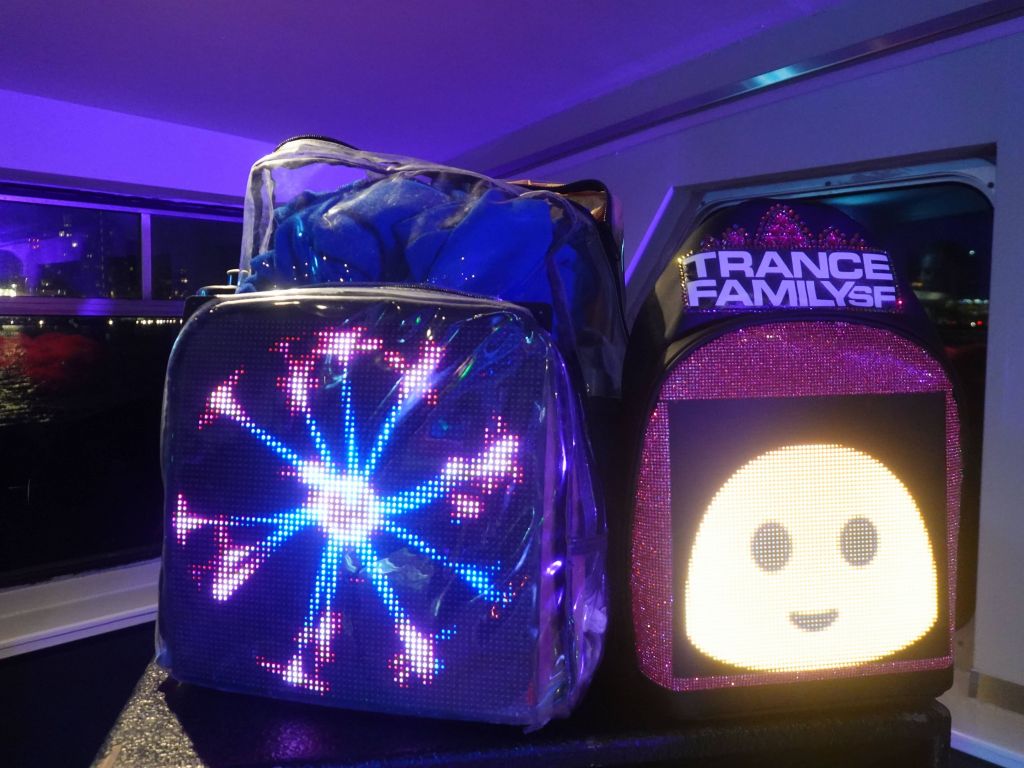
with 64x64 P3.5, you can of course see the bigger pixels
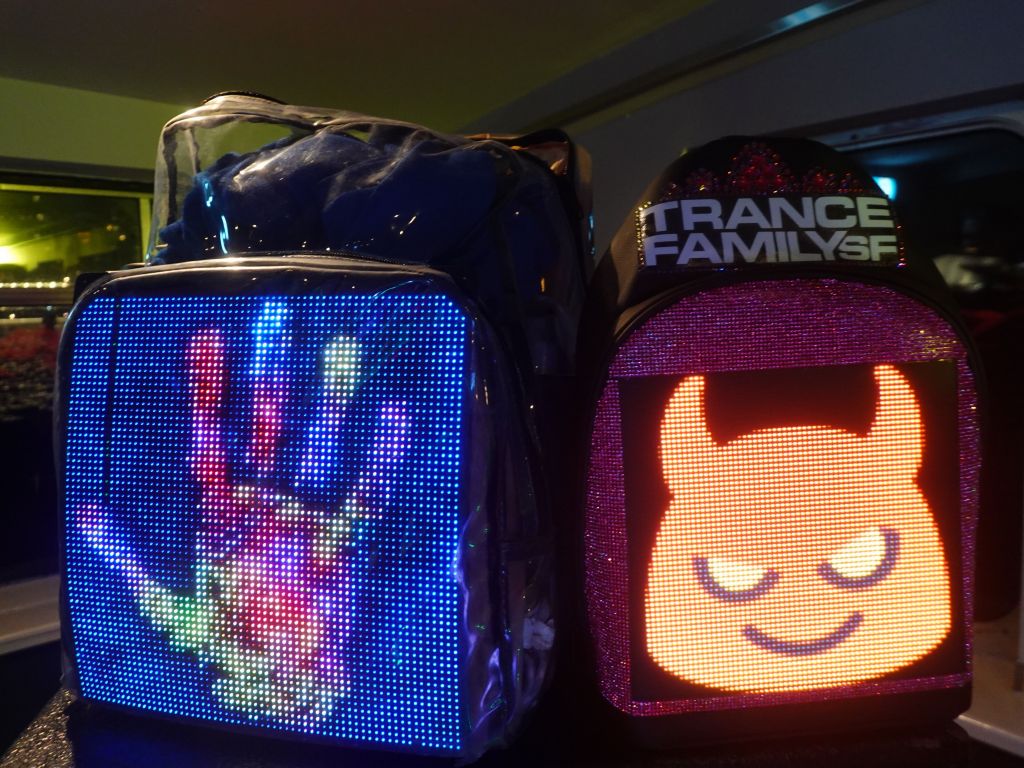
as I mentioned, they broke easily
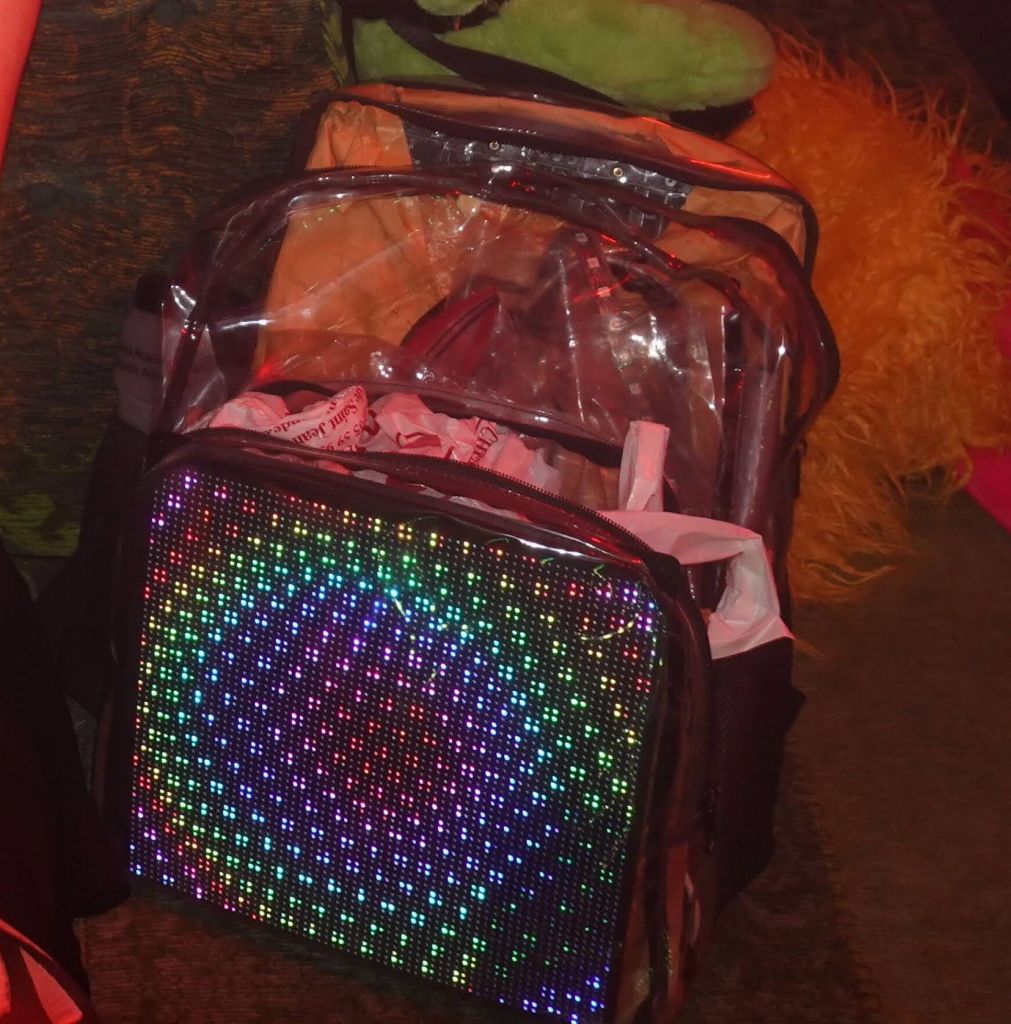
here the bottom right corner is broken
Story
For a long time, I had been wanting to run my own code on my LED backpack, but I also wanted higher resolution, so I held off. While I was at it, I also wanted my backpack to be synced with my LED outfit, so after I did the work to make my LED Outfit v8 with independent front and back screens that are not connected physically (they do share power for convenience reasons), the same wifi code that keeps them in sync was now easy to add to an external display like one in a backpack, so the only thing left was to get said display.For size reasons, LED backpacks are sized to work with P3.5 64x64 panels, which also means they work perfectly with P1.875 128x128 panels. My only need was to find some that were bright enough and would not break right away. This is where Hongren Su from Azerone, who has been my trusted panel seller for years now, got me 2 sets of P1.825 PWM panels (they run a different PWM chip), which ensured they'd have high refresh rates and work pretty well in daylight too. Thankfully, earlier this year, kindgoc9 made a fork of the hzeller RPI RGB Panel code, and added support for enough PWM panels that both kinds I got, just worked. First, I had to significaly improve the robustness of my wifi code, which took a bit of time as the ESP32s like to save power but in the process woudl also lose broadcast packets I used to discover other screens. Google gemini helped figure this out, and with my guidance, I made some more robust code that works most of the time. Most of the time is because unsurprisingly, I found at a festival that there can be so much RF noise, that my ESP32 AP is not visible by the other chips, or my phone, so I'll need to implement some workarounds for that, but otherwise it worked well. First, I had to find some driver settings to get around some display issues, and found that adding a higher GPIO slowdown, fixed it:


wrote some extra code to shrink the graphics on 128x128 displays


the other bad news is that it's pretty battery hungry and I need 2x70Wh for a full night

the panel + 2 LED strips took around 100Wh for 7H, pretty hungry but 2 70Wh batteries do the job

for comparison, my full front and back outfit (without extra LEDs) took 125Wh for the same 7H-ish

not the most professional setup, but ok for the first time ;)

my 2nd prototype uses raw panels and a nice metal frame done by Hongren Su from Azerone


the 2 kinds of panels look the same from the display side (and yes, they work with USB packs that can do 12V USB-PD)
Power Use
That was the tricky part. For comparison, the 64x64 ones I made run by just an ESP32 S3, used 1.5W of power or so. The first version of the rPi one, was taking 12W (!)


almost 10H runtime, great news!