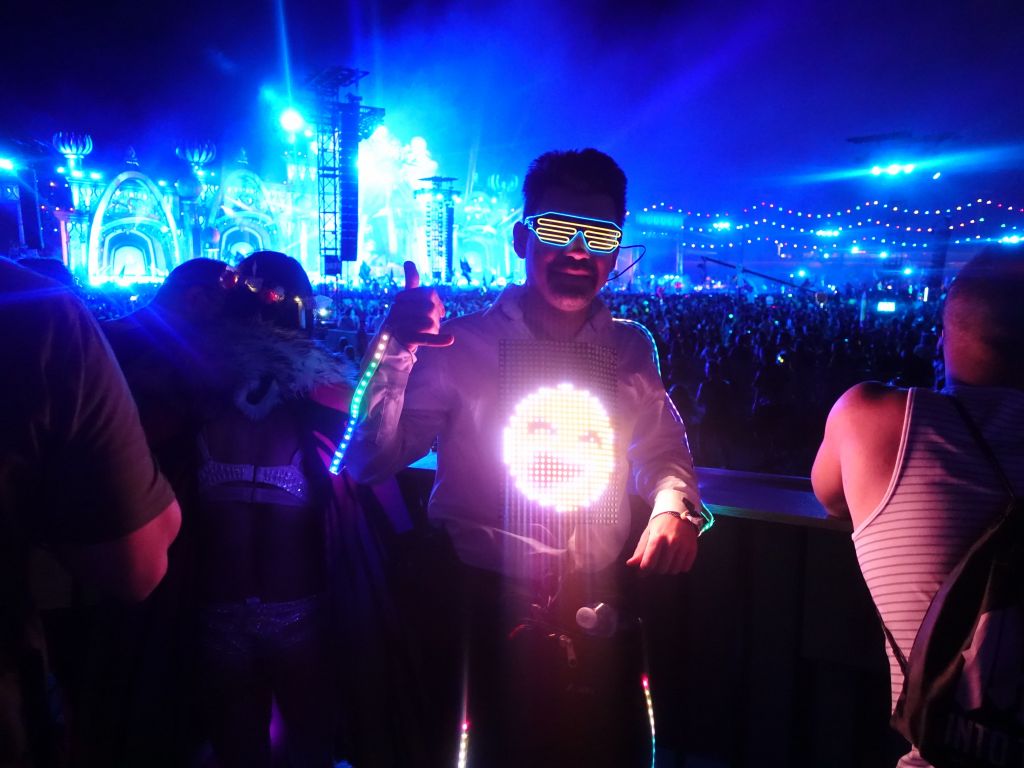
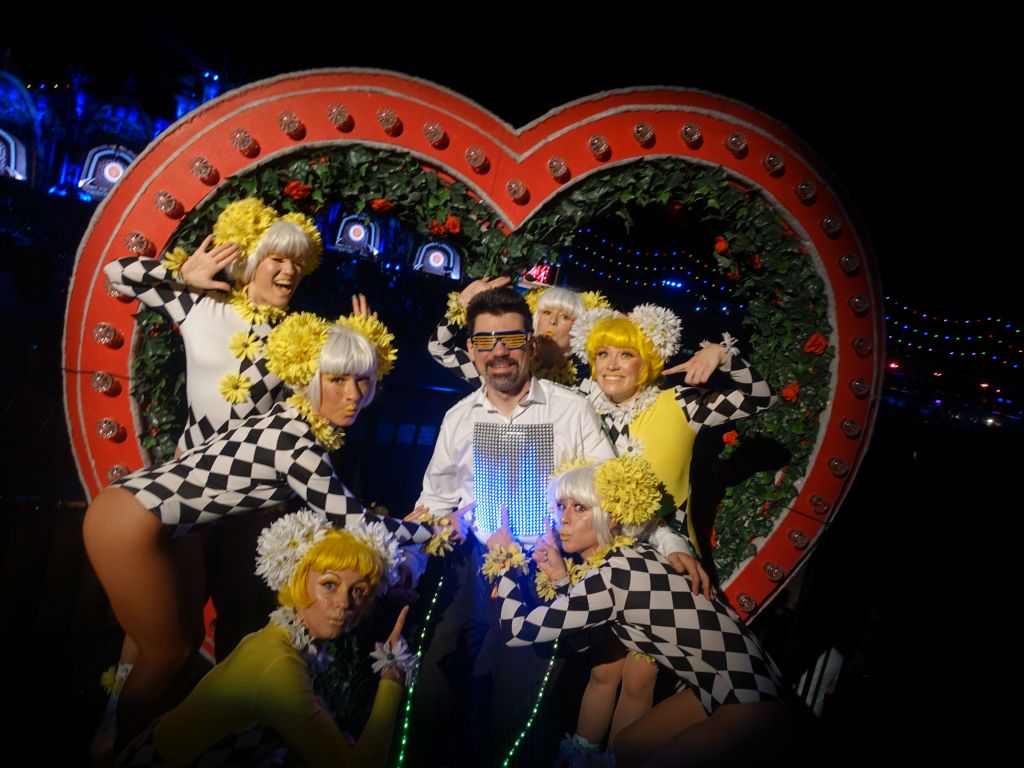
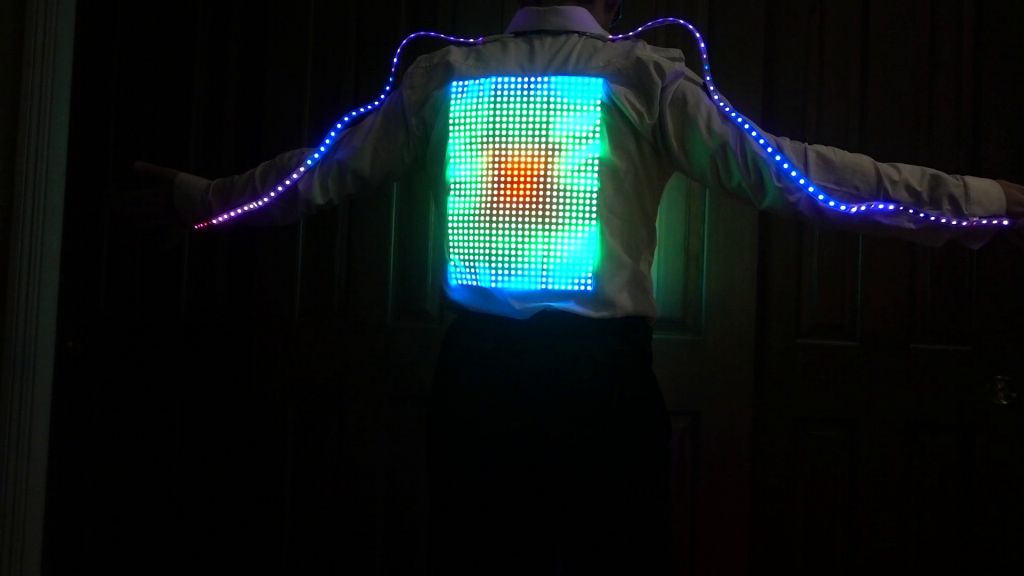
After I figured that my previous shirt was getting a bit stale, I wanted to design EDM Party Shirt v2, which both had to be easier to wash (the previous one had LED strips all over it that were too much work to remove, making the shirt not really washable), and I also wanted it to be more special.
I had been playing with Adafruit::NeoMatrix and figured it would be cool to have a NeoMatrix on my shirt (also it would be easier to remove a whole panel to wash the shirt).
So, in the great tradition of yak shaving, I first decided that I should be able to use FastLED instead of Adafruit::Neopixel. This was mainly at the time because FastLED allows parallel output and therefore allows updating a screen by segmenting it in smaller pieces that are updated in parallel. With Adafruit::NeoMatrix, my 768 pixel panel would have taken about 30ms to refresh, or only 33 frames per second, which is not a lot. With FastLED, I was able to trivially segment it in 3 and get 10ms/100fps, which is a whole lot better for animations.
Turns out, switching to FastLED also gave me access to LEDMatrix, an alternate library which while lacking Adafruit::GFX primitives, offers another nice API including better text and basic sprite support.
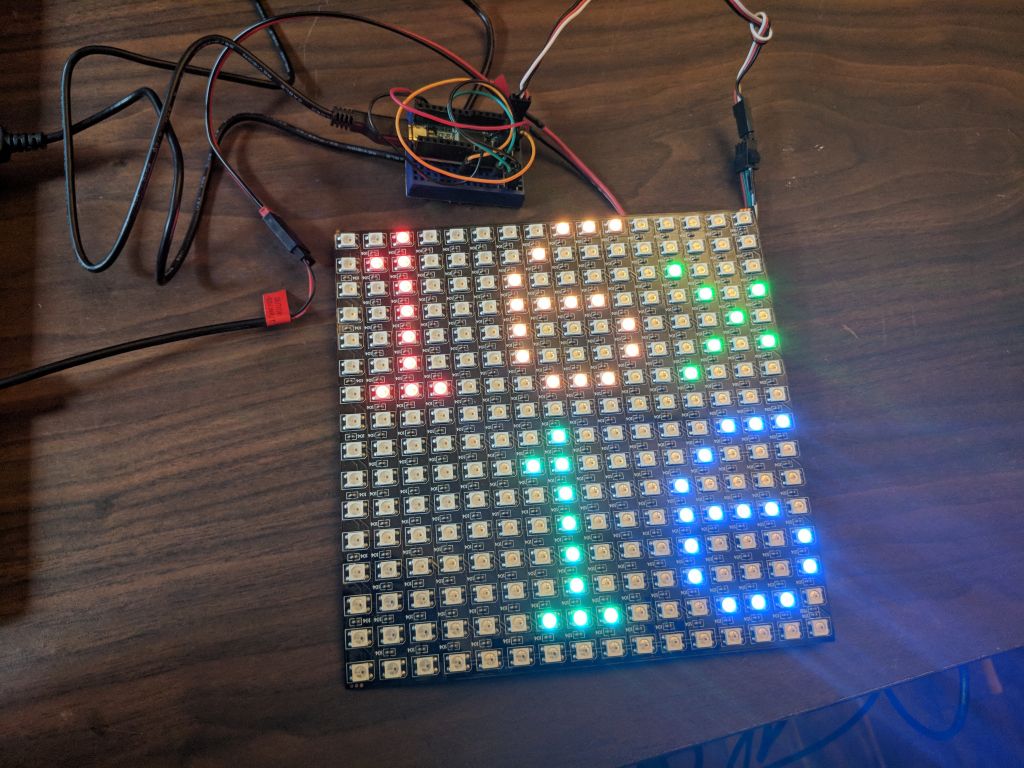
So, I started a port of Adafruit::NeoMatrix to FastLED and wrote FastLED::NeoMatrix. It was actually a non trivial port, which took much longer than I thought, but I got it working in the end:
by then I was already able to display with 3 data lines, one for each 32x8 panel
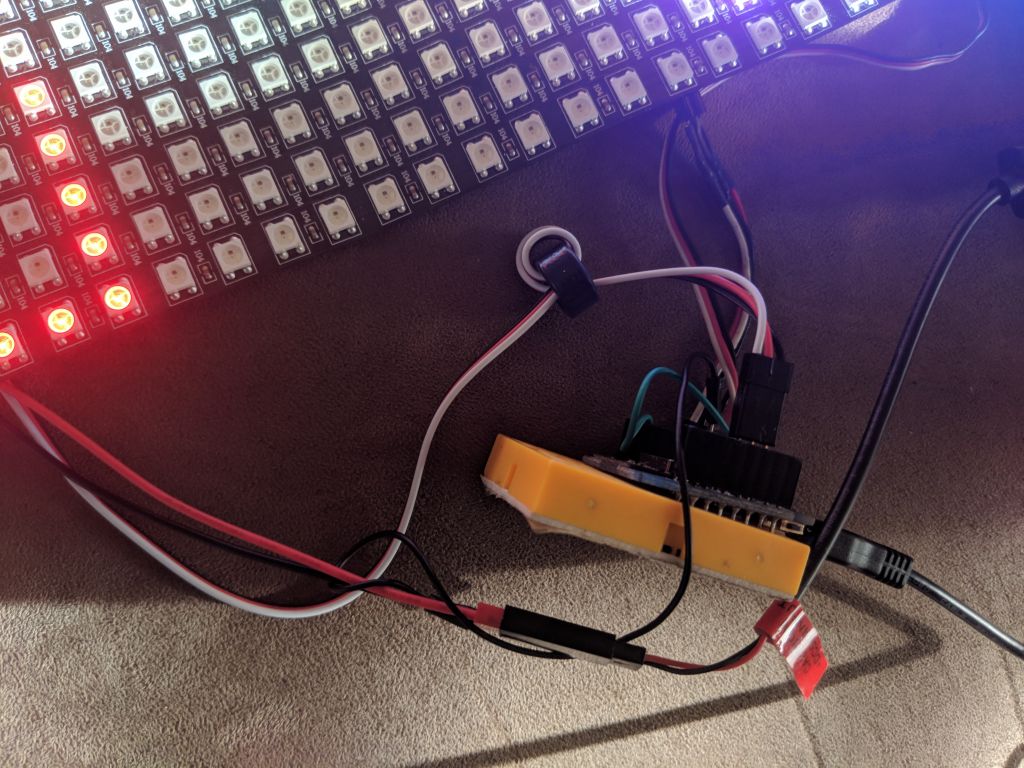
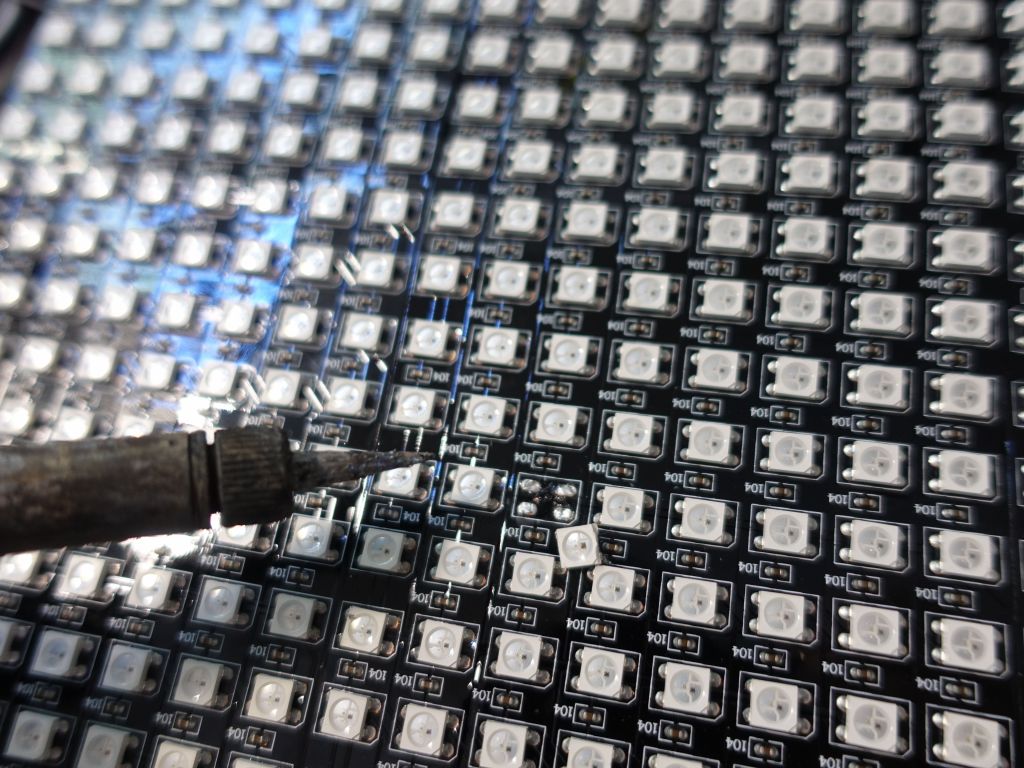
In the process, I managed to plug the wrong power into the panel and blew a pixel. Thankfully I was able to borrow another pixel from a strip and soldering it in place to fix it:
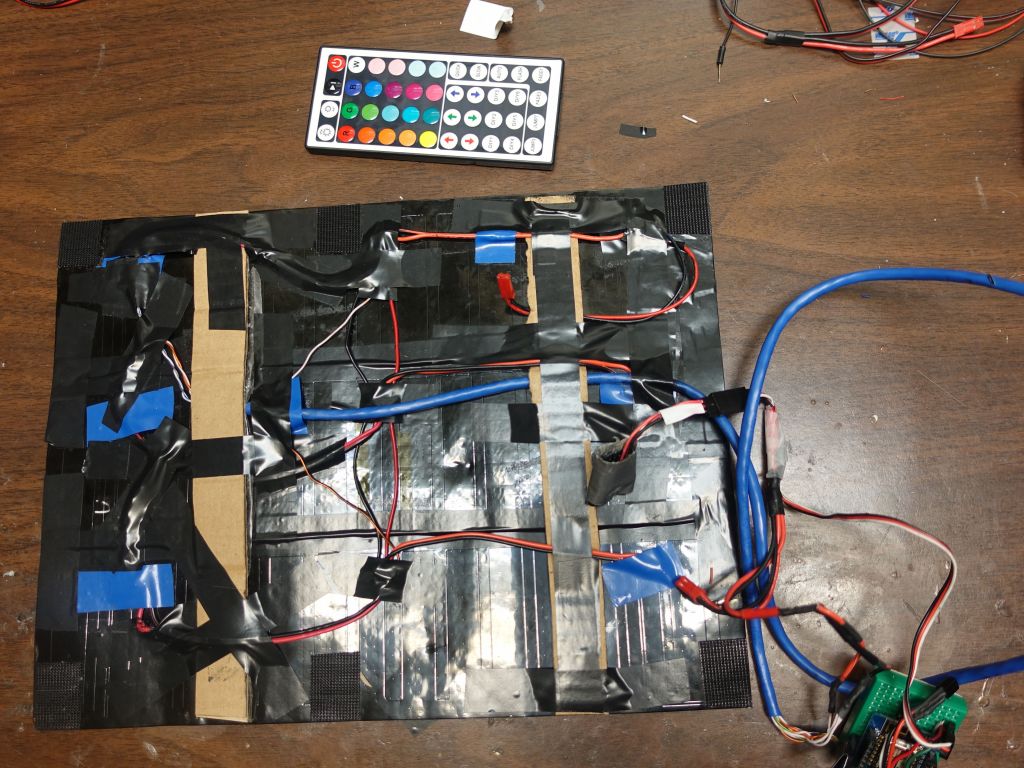
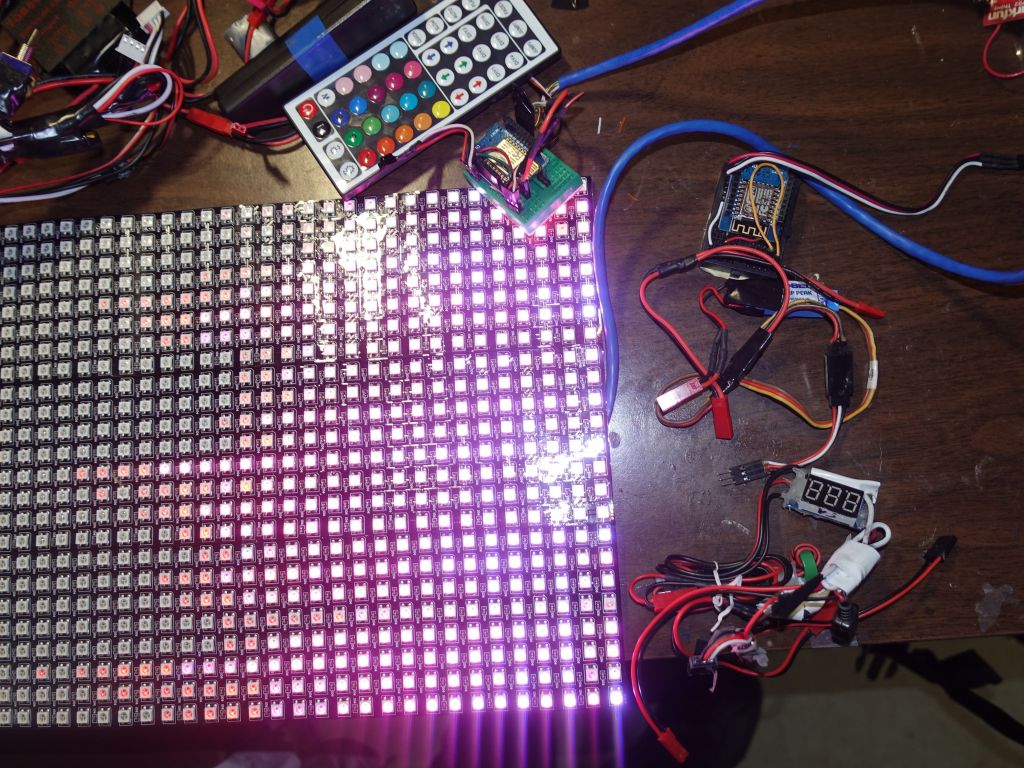
Once the port was done, came time to get the panels together. Wiring was a bit challenging because I had to ensure that power was injected at a mostly equal value in 9 different points (3 per panel) due to voltage sag at higher amps. I then quickly found out that with 3 data lines at high frequency, there is cross talk between the wires, so I switched to a CAT-5e cable where each data line is twisted with its ground and the remaining 2 wires are used to bring VCC (5V). Technically my 3 panels can use up to 60A at 5V at full power. Obviously many things will melt before that, and I'm using a power converter that tops out at 10A. Even 10A is too much for the wiring, but thankfully my displays don't use that much brightness (it would be blinding to people):
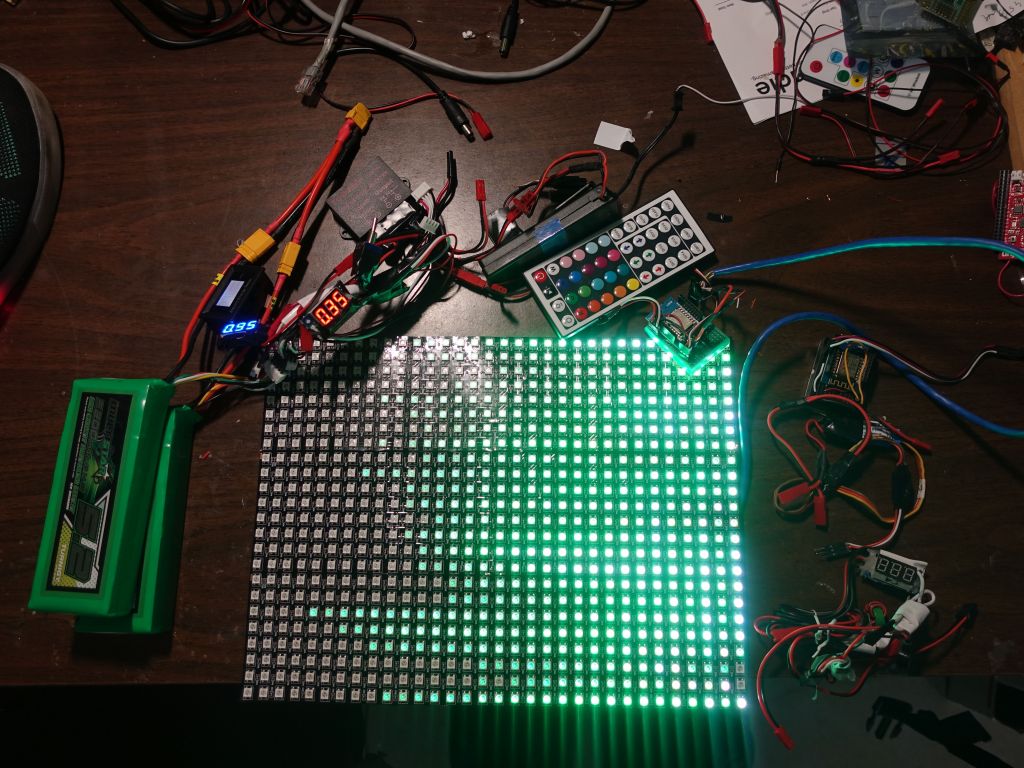
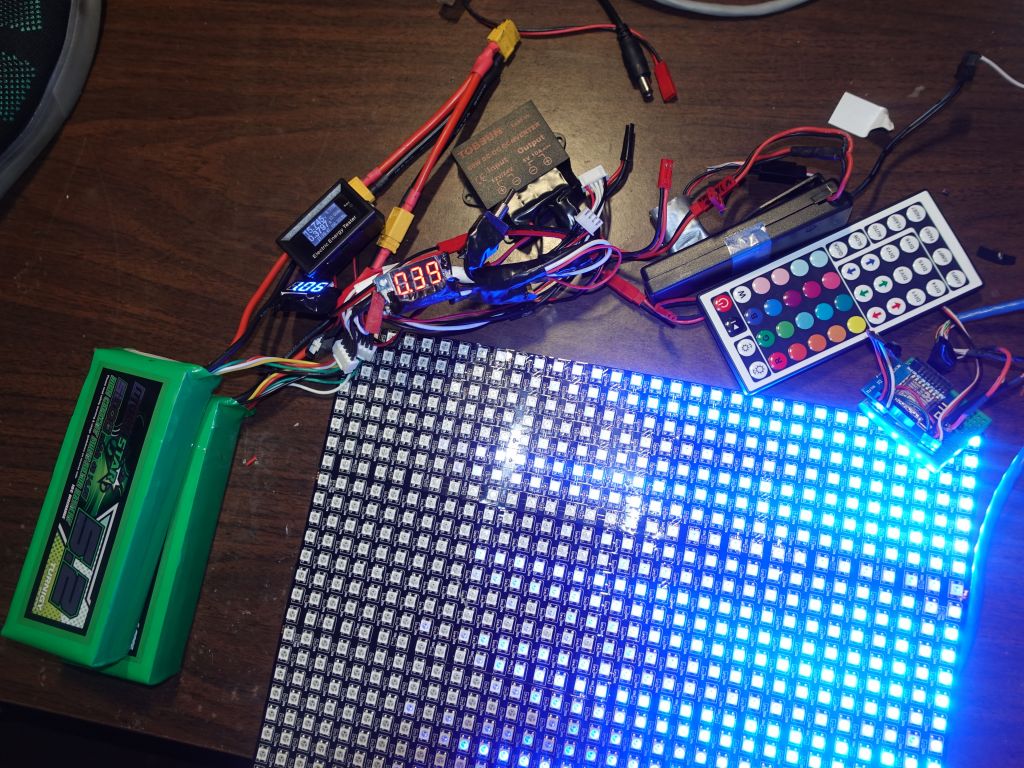
two 5Ah 16V lipos give about 160Wh, just enough to run 2 panels 10 to 12H
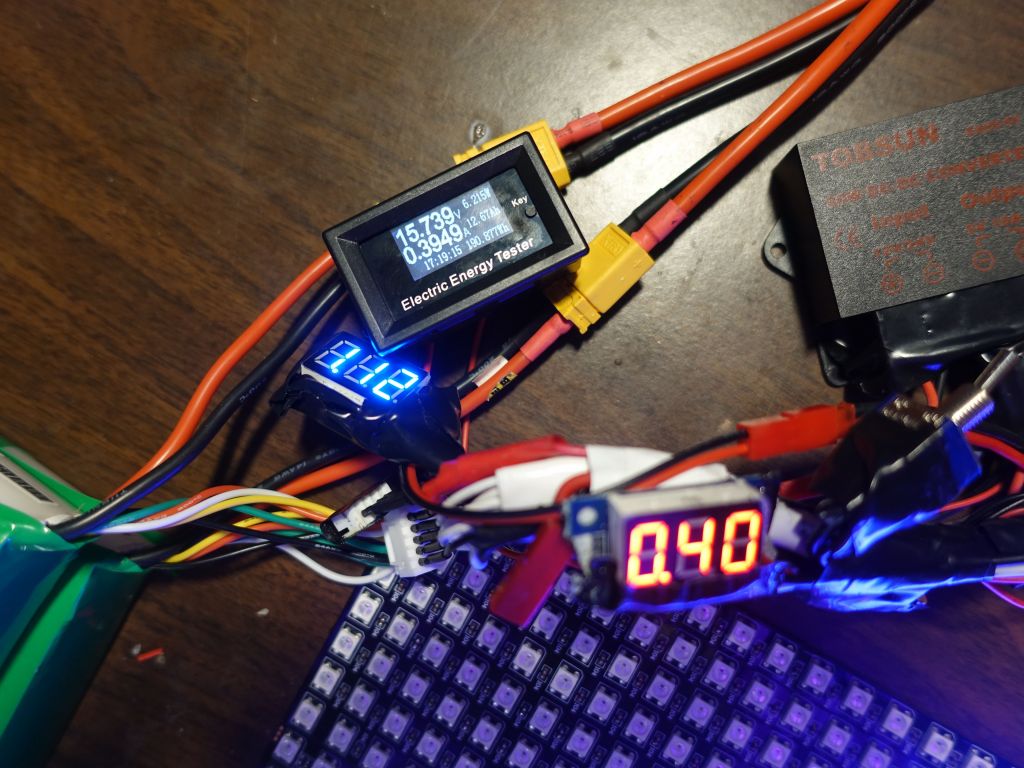
the fancy energy meter keeps track of how much time I used and how many Ah came out of the batteries. Useful to know how much time I have left. The blue meter is amps at 5V (after the power converter) and the red one amps at 16V (straight from the battery)
on the right, I have a backup ESP8266 if the main one fails, a backup BEC (5V converter) that's technically 10A capable but not meant to do more than 5A continous, and bottom right is my older 3A BEC with in line amp meter
the new tobsun 5V converter is bulky but does 10A without issues
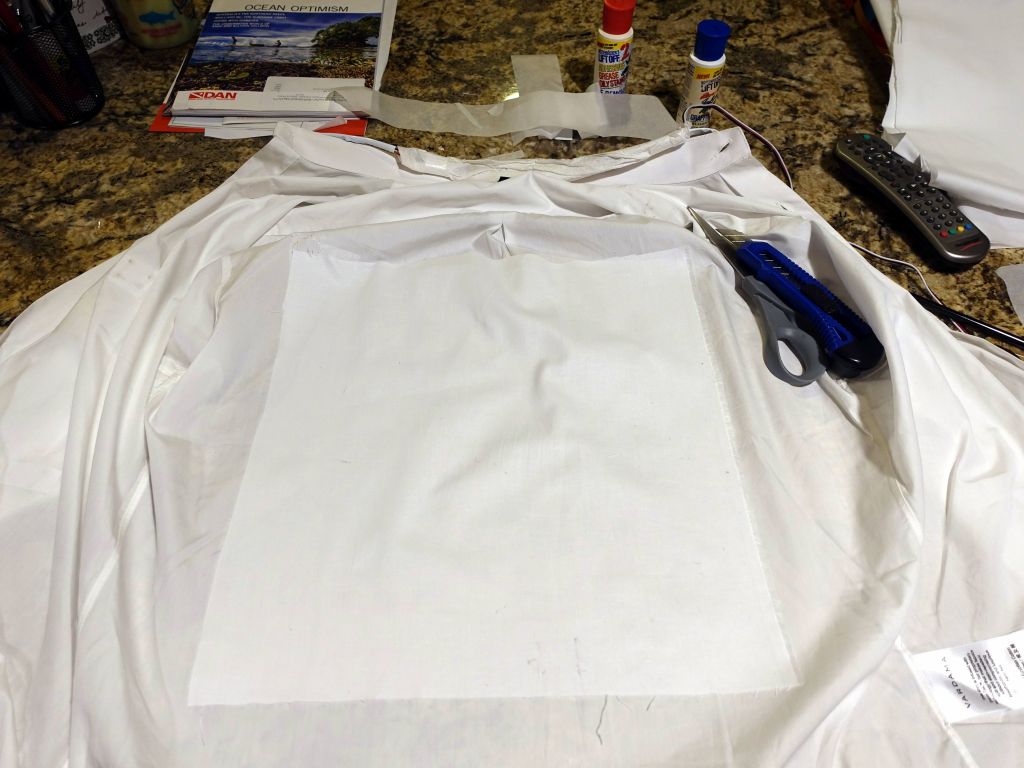
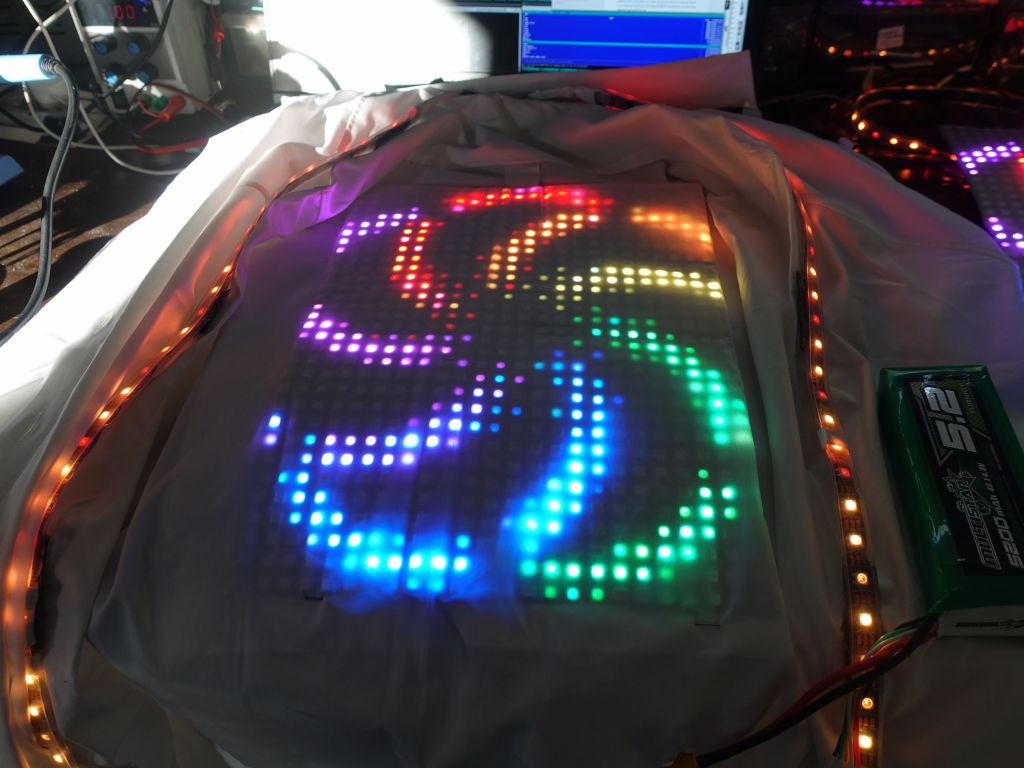
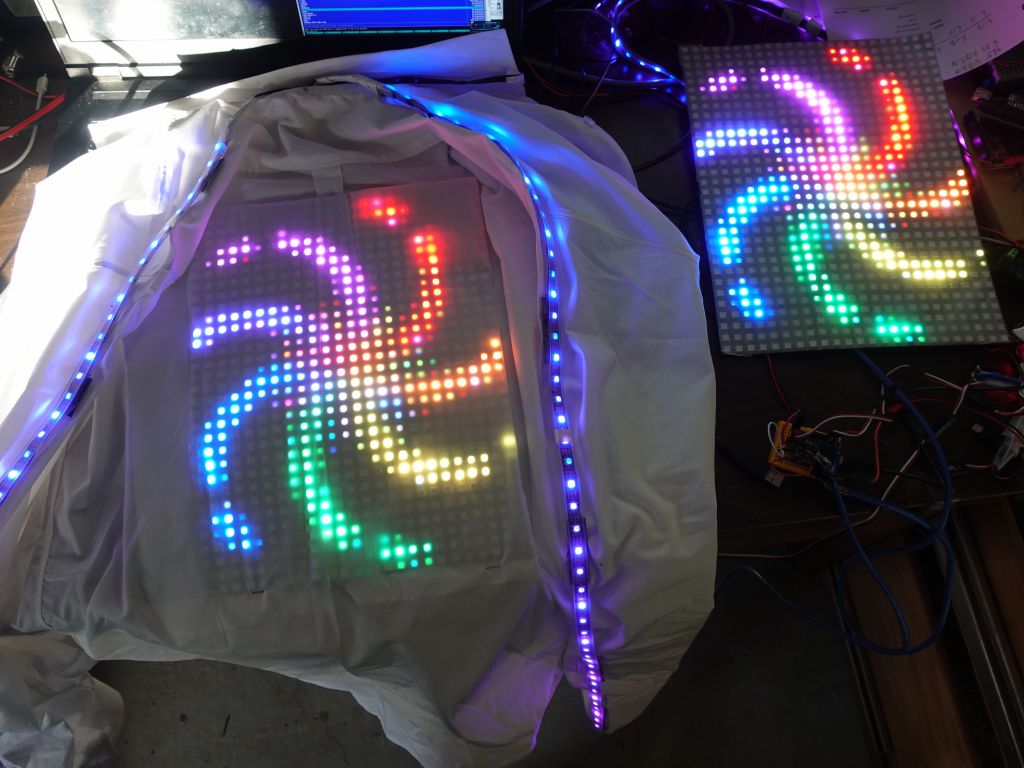
For the back of the shirt, I got some fabric and created an inside pocket to hold the panel:
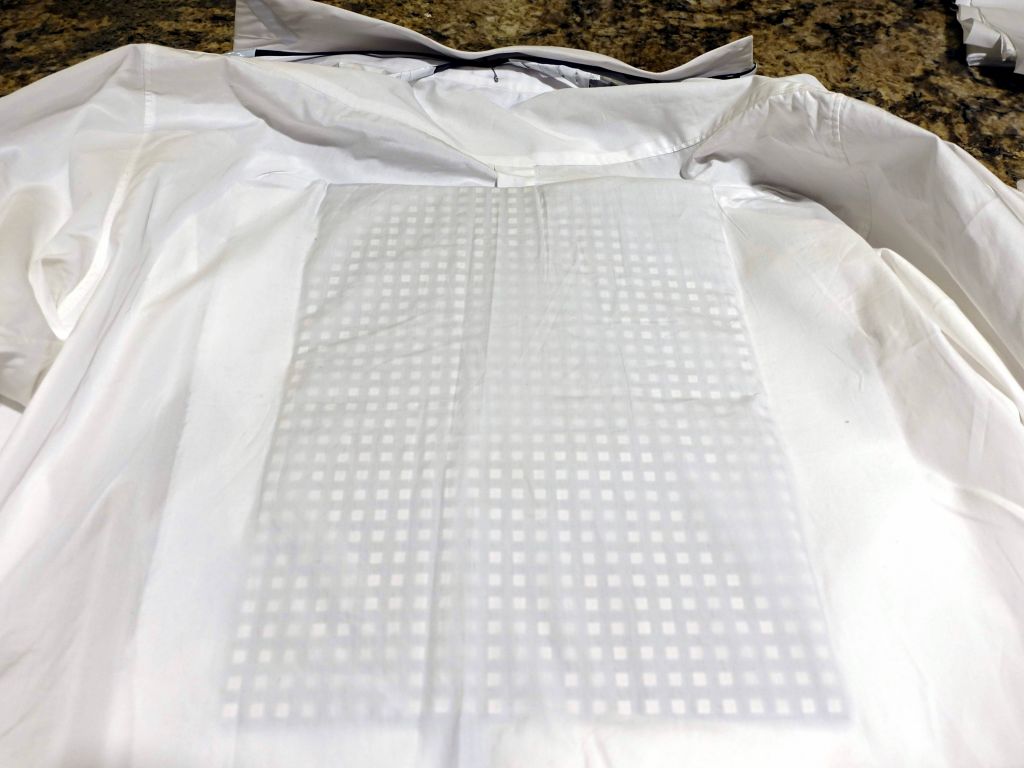
it then mirrors the front
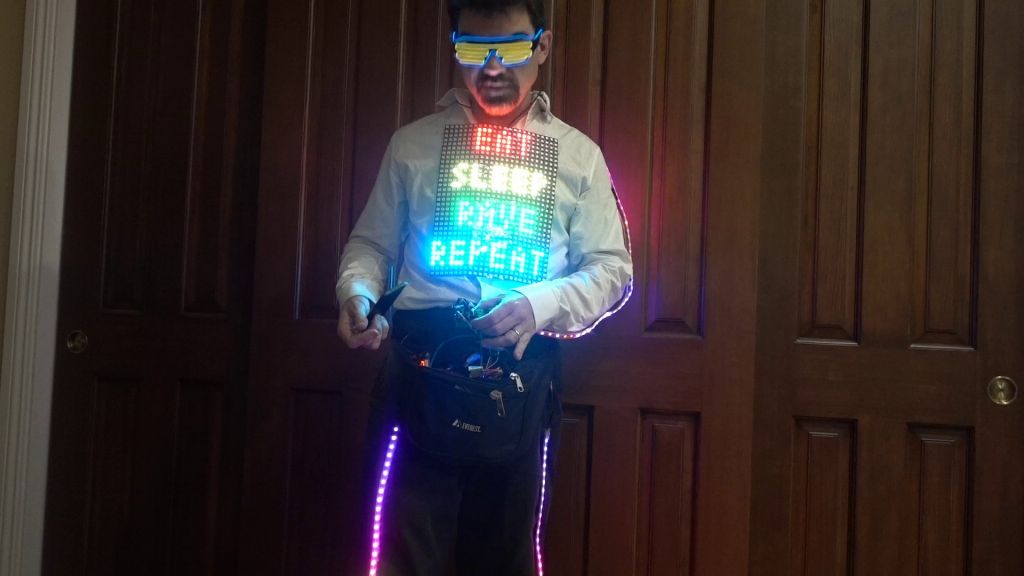
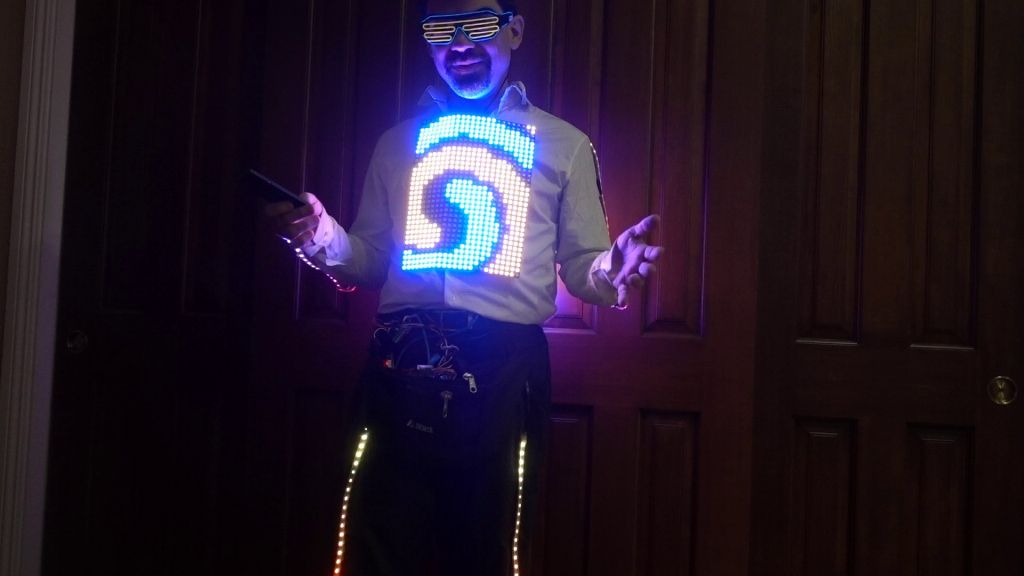
All this crap goes into a fanny pack, and gets wired to my shirt, pants, and glasses:
the cool part is that my back also has a panel inside the shirt that uses the shirt as a diffuser